Patients rarely dispute a fee; they dispute a vague record of it. A clear receipt or itemized bill listing the session date, service name, and minutes turns billing into proof of care, whether the visit was counseling, therapy, or a wellness session.
Your expertise belongs with the client, not with administrative tasks. A therapist receipt confirms payment without exposing the diagnosis, treatment plan, or psychological conditions behind it, so the session record stays professional and private, which matters in mental health care, where mental illness carries stigma.
After reviewing dozens of invoice templates built for practices, I’ve found layouts matter less than control. Our receipt editor finishes invoicing in minutes: download a PDF to print or email, without wrestling with Word, Excel, Google Docs, or Google Sheets formatting.
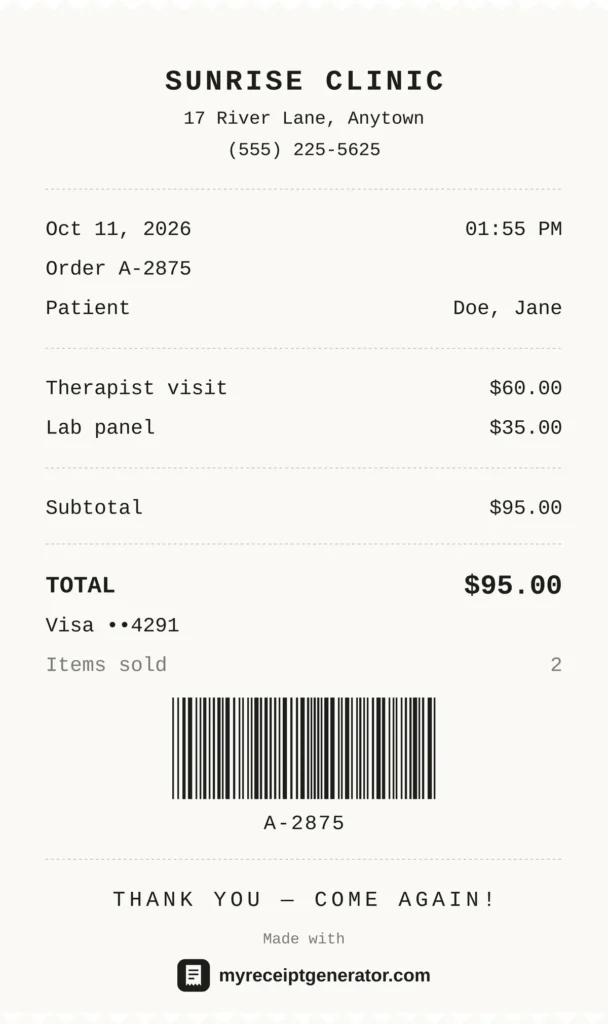
What A Therapist Receipt Or Invoice Is And Who It Serves
Invoices are bills that ask for money; a therapist receipt confirms a payment that already happened. That single difference decides which document you send. The receipt date should match the date you received payment, not the session dates, and that one detail settles more client questions than any design choice.
Who reads it? Patients first, but often caregivers paying for a teenager’s counseling, and sometimes health insurance providers when the client wants to be reimbursed. A solo private practice billing one appointment and a large specialized mental health clinic juggling complex treatment across several visits need the same thing: an organized record with plain descriptions of each therapy service.
Clients lose confidence over sloppy paperwork faster than over a fee increase. A well-designed receipt protects your image as a mental health professional and signals that the personalized medical treatment and care behind the payment were handled with the same expertise. Small documents build trust quietly.
Show The Sessions Covered By The Payment
When a single payment covers several sessions, give each appointment its own dated row, the same way an itemized therapy bill would. A client who paid once for three completed sessions should see exactly what that money bought, and know they won’t be asked to pay again for any one session.
Keep every row at a quantity of 1 and let the Unit Price carry the listed fee for that visit. Note the length too: a 50-minute intake and a 30-minute check-in are different therapy services, and even a one-minute mismatch with your calendar invites questions.
Here’s a fictional USD example. Tax is shown at 0% for illustration because many jurisdictions exempt therapy, but confirm the rule where you practice.
| Date | Description | QTY | Unit Price | Amount |
| September 3, 2026 | Individual counseling, 50 minutes | 1 | $130.00 | $130.00 |
| September 10, 2026 | Follow-up counseling, 30 minutes | 1 | $75.00 | $75.00 |
| September 17, 2026 | Individual counseling, 50 minutes | 1 | $130.00 | $130.00 |
| Subtotal | $335.00 | |||
| Tax (0% illustrative) | $0.00 | |||
| Total Paid | $335.00 |
Paid in full by bank transfer. Receipt date: September 18, 2026. The receipt date falls after the last session because the document confirms the payment, not the appointments.
How To Create / Fill Out A Therapist Receipt (Invoice)
Here’s the order I’d follow. It’s also the one that saves the most back-and-forth with clients later.
- Start with your practice details. Put your company details at the top: practice name, logo, address, clinic phone number (or your own phone number), email address, and website address. Clear contact information means clients know exactly who to reach with payment questions.
- Number and date it. Give every document an invoice number or receipt number and keep the sequence unbroken. Something like 001-001 works fine. Add the issue date and the date payment was received. Unpaid invoices also need a due date and payment terms, such as 30 days. A standalone receipt for money you’ve already collected doesn’t.
- Fill in Bill To. This names the payer, and that’s not always the patient. In pediatric therapy, the caregiver usually pays, so their name goes here, and the child shows up only as a patient code. Using a generic project invoice template? Rename the “customer” field so it reads like healthcare, not consulting.
- List each session as a line item. Every line gets a description, quantity, unit price, and the session dates it covers. Be specific with service names and lengths, because “session” on its own tells the recipient nothing. Whether you charge an hourly fee or a flat rate, list the fees per visit. Therapists who specialize in telehealth often add the delivery method too (in-office or online), since some health insurance company forms ask for it.
- Do the math. Apply any discounts, then show the subtotal, tax rate, tax, and total. Most therapy services carry no tax, but double-check what’s legally required where you practice.
- Close with the payment. Record the payment method, the total price paid, and any balance left. Those three lines answer most questions before anyone has to ask.
- Keep clinical details off it. Diagnostic results, tests, medications, treatment plans, and progress belong in patient records, not on something that might get emailed or printed. Privacy requirements vary, but a safe habit is keeping notes and any comment field to a reference back to your appointment records. If a client needs it for insurance claims, add only what the insurer asks for and the client okays.
- Save a copy. Whether you work in Word, Excel, Google Docs, Google Sheets, or a generator that gives you a PDF, file it with your payment records and link your terms of service where clients can find them. Honestly, after about 10 receipts this becomes second nature, and the contact line at the bottom handles whatever questions are left.
Notes Section Guidance
Most flexible invoice template designs leave a bit of extra room at the bottom, and it’s tempting to fill it. Don’t. On a routine payment receipt, short is better.
What belongs in notes:
- A session reference
- Payment details, meaning how the payment was made
- Any remaining balance
What stays in your record system:
- Diagnoses and assessment findings
- Medication and therapy changes
- Session discussions and milestones
Keep in mind that a patient might forward this to an employer’s benefits portal. A short reference code links the receipt to the chart without giving anything away. The three-session example below shows just how little you need.
Example: Notes
Received $335.00 by bank transfer on September 18, 2026. Payment applies to three sessions: September 3, 10, and 17, 2026. Reference: TH-218. Paid in full, thank you.
Four sentences, no clinical detail, and nothing the client could misread about which sessions are settled.
Timing And Payment Schedule
Issue a new receipt for each payment, not each visit. That one rule handles nearly every timing question. A client paying at the completion of the session gets one receipt per individual session; a client settling monthly gets one receipt covering several sessions.
Not every therapy bill fits that rhythm. A psychiatric assessment that leads to a preliminary diagnosis can be expensive, and the length and complexity of ongoing therapy depend on the patient’s condition. Offering installments keeps therapy manageable for the client while you stay compensated on a regular payment schedule.
Send one invoice for the full amount, then confirm regular payments with receipts that reference earlier payments and show the balance remaining. If an insurance provider pays part later, record it separately so your revenue figures stay clean.
Insurance, Reimbursement And Sharing Details
Let’s be honest up front: no receipt can guarantee reimbursement. Health insurance providers make that call. What you can do is make the receipt easy to verify.
Before your client submits a claim:
- Check that your provider details and service details are accurate.
- Show the money received and the date it actually arrived.
- Ask them to look up the information required by their insurer or benefit program.
- Let them know some insurers have them attach your receipt to a claim document as part of their usual process, while others want a separate superbill.
Whatever they need, the receipt stays a payment record. It’s never a window into your clinical files.
When someone else pays:
- If someone else paid for a client’s session, like a parent, partner, or employer, confirm who’s authorized to receive the receipt and send it only to that email address.
- Keep the client’s payment distinct from any expected insurance payment.
- Log a later insurer payment, plus any adjustments, on its own receipt.
Clean, separate records are what get patients reimbursed without endless back-and-forth over insurance claims or rejected claims.
Branding And Professional Look
Clients pick up on inconsistency long before they notice design. A receipt that looks different every month feels less trustworthy than a plain one that always looks familiar. Elegantly designed doesn’t mean decorated, either; the most professional styles are mostly white space.
Your branding checklist:
- Pick one of the templates and stick with it.
- Add your practice logo and two brand colors, no more.
- Choose a readable font.
- Use the footer for your website address and a payment contact, so billing questions don’t end up in your clinical inbox.
- Set the currency once per client (USD, CAD, GBP, EUR, or AUD) and make sure the amount matches your agreed fees.
Reusing a receipt? Watch this: when you duplicate a receipt for a returning client, treat it as a new draft. Give it a new number, update the session dates, payment date, service details, and Notes, and clear out old details before you hit send. Saved client details are a real time-saver, but a copied receipt with last month’s dates is just a wrong payment record.
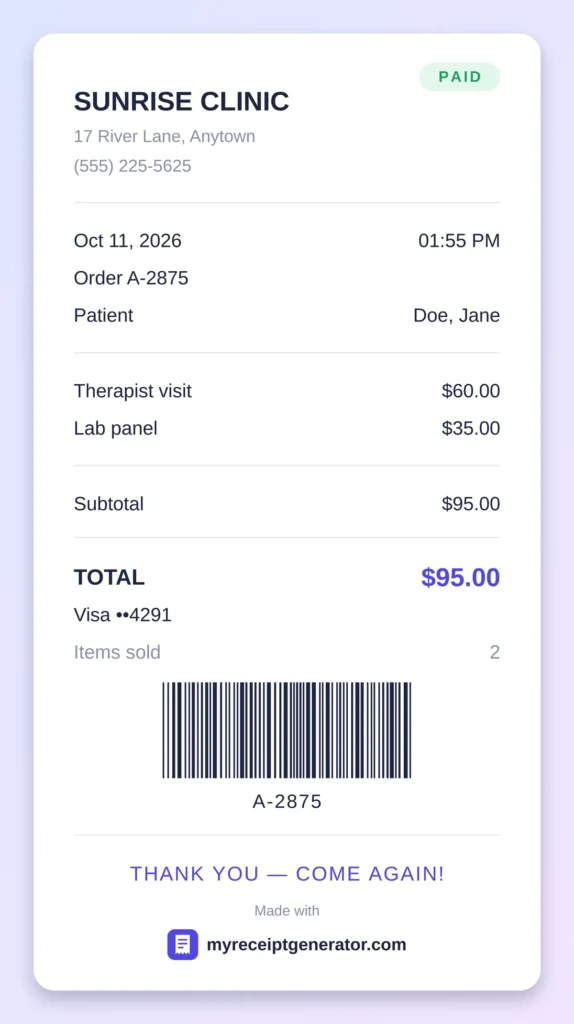
Template Formats And Downloads
Picking a format is really a storage decision, not a style one. Here’s how they compare:
- PDF: locks the layout, so what the client sees is exactly what you filed. It’s the best choice for the receipt file itself.
- Word and Google Docs: easy to edit, but also easy to alter after the fact.
- Excel and Google Sheets: handy if your practice tracks payments in rows. Treat them as a separate option for bookkeeping, not the bill or receipt you send.
Our generator is free and lets you download a PDF without signing up. General receipt templates work fine too. Just follow your own sharing rules for files with client names in them, and back them up like any other assets you use to manage your business.
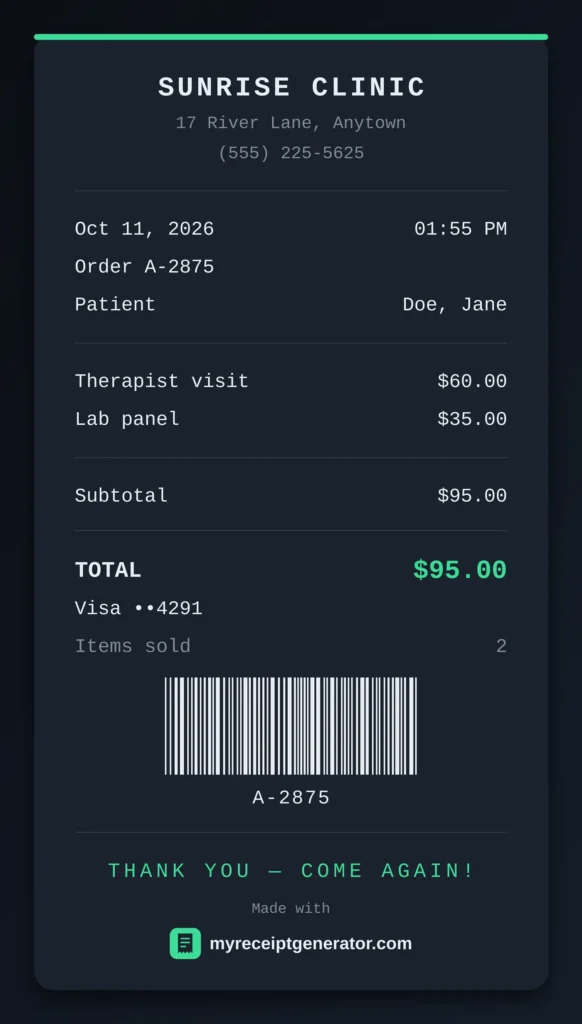
Smart Billing Habits For Therapy Practices
Use Numbered Invoices
Numbered invoices make ong,oing therapy easier to manage. Pair a sequence number with a patient code, for example 0412-007 for the seventh document issued to one individual patient, and you can track invoices issued without searching by name. Therapy billing stays searchable, and patients’ names stay out of your filenames.
Additional Expenses
Home visits and school observations bring additional expenses such as travel. If you charge for them, list each as a separate billable line on the invoice with enough details for the patient to see what was billed. Keep the receipts for those costs as well; they belong in your own expense report at tax time.
Accept A Variety Of Payment Methods
How patients pay has evolved faster than how most practices bill. Accept debit cards, e-Transfers, and online payment methods alongside cash, and record the method on every receipt, because convenient options mean fewer late balances. Platforms built for goods and services may treat health payments differently, so read their terms before using them for therapy services.
Include Important Patient Care Notes
There’s one exception to keeping notes purely financial. When an invoice goes only to the patient, never to an insurer or third party, some therapists use the extra room on a flexible invoice template for one important line: a heads-up about upcoming therapy changes, a reminder to bring a medication list, or a few words to celebrate milestones. Ask the client first whether they want that on paper.
Therapist Receipts For Every Mental Health Profession
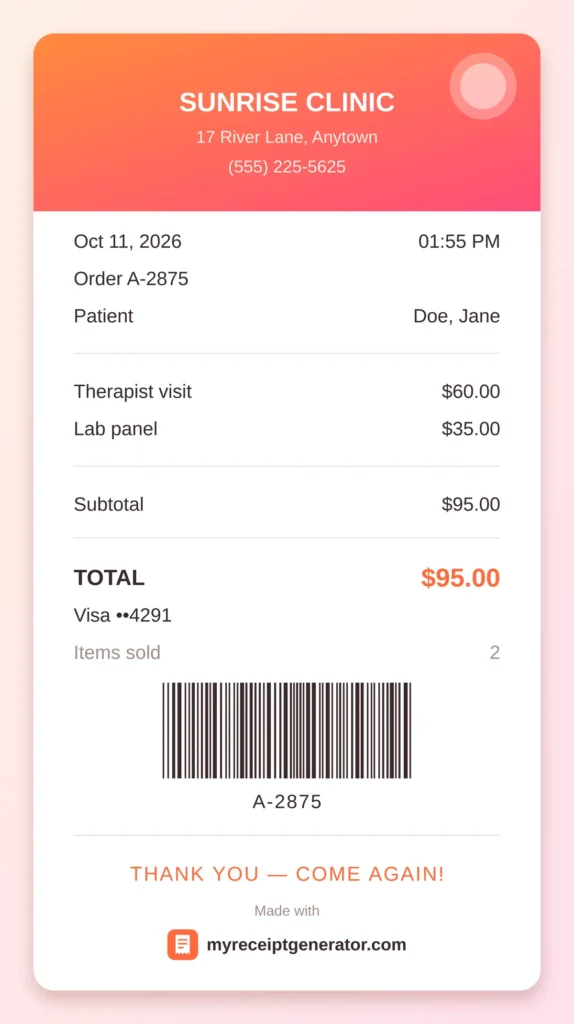
Therapy
Mental health therapy covers wide ground, from anxiety and depression to eating disorders, and the billing rhythm shifts with it. A weekly anxiety client may pay per visit, while eating disorders care often bundles sessions. Customize the invoice template to match, keep therapy details limited to service type and length, then download and send each invoice to patients the same way every time.
Psychologists
Psychologists who treat a range of mental health conditions often split their week between assessment and ongoing sessions, which makes invoicing messy. A customizable invoice template with separate lines for testing and therapy keeps each invoice professional and saves energy for helping patients instead of formatting paperwork.
Psychiatrists
For patients struggling with severe mental health crises, a psychiatrist’s care can help save their lives, and that important work deserves billing that stays out of the way. Because psychiatric diagnosis and medication treatment are more often billed to health insurance providers, choose an invoice template with room for the provider details insurers expect.
Psychotherapists
Psychotherapists who specialize in long-term therapy work in a complex field of therapy where patients may attend for years, so their invoices must stay consistent over time. A free, customizable invoice template keeps the same layout and details from the first session to the last.
Behavioural Psychologists
Behavioural psychologists help patients understand and change behaviours, and that specialized expertise is valuable. Programmes often mix one-to-one sessions with parent training, so a customizable invoice template that labels each service separately makes a world of difference for families reading the bill.
More Help With Session Receipts
If you also bill for massage therapy or other bodywork, the massage therapy receipt template handles prepaid packages and varying visit lengths. For service-specific receipt guidance beyond therapy, browse the health and wellness collection; the health & wellness receipt templates follow the same rules for clean session receipts.
Frequently Asked Questions
What Date Should I Use When A Client Pays After A Session?
Use the payment date. If the session was on Monday and the client pays a few days later, the receipt date is the day the payment was received, not the appointment date. Put the date of the session in the service description instead, so both appear, and neither confuses when sending the receipt.
Can I Include Office And Remote Sessions On One Receipt?
Yes, if one payment covers both. List each appointment on its own row with its date, its fee, and a short service description marking it as office or remote sessions. One receipt for mixed services is fine as long as the client can identify every line, and nothing the client discussed appears on it.
What If Someone Else Pays For The Client’s Session?
Put the person who paid the bill in the customer details and confirm the client has authorized sharing before that person can receive the receipt. Describe the service briefly, use a session reference instead of clinical notes, and leave out unnecessary client information about the client’s session.
How Should I Record A Cash Payment For Therapy?
It’s simpler than it sounds:
- Set the method to Cash and enter the exact cash amount.
- Use the day you received it as the receipt date.
- If it’s a partial payment, add the remaining balance and the session reference in Notes.
A receipt matters most with a cash payment for therapy, because it’s often the only proof that money changed hands.
Can A Client Use This Receipt For An Insurance Reimbursement?
Often, yes, but no template can guarantee an insurance reimbursement. The client should check the insurer’s requirements: many accept a receipt with provider details, session details, and proof of payment as part of their usual process, while others want a specific claim document before approving reimbursement.
Does Sending Another Copy Mean Recording Another Payment?
No. A replacement copy is the same receipt, carrying the original payment date and number. Sharing a copy doesn’t create a new payment record, so don’t log another payment in your books. Mark reissued documents as copies if you like, but keep them tied to the original payment.